
Aztec Tribute (Red Tiger Gaming) — Bonus Structure Review
Aztec Tribute by Red Tiger Gaming is built around a bonus design that does more than simply add extra spins to a standard base game. The slot uses a layered structure in which the player first follows a climbing wild mechanic and then, at a key point, moves into a decision-based bonus model tied to two different gods. That choice changes the maths of the session in a noticeable way, so the game feels less like a routine Aztec release and more like a slot where the payout pattern depends on how the feature path is formed. For players who prefer bonus rounds with a clear identity, this is the main reason Aztec Tribute stands out.
How the core bonus structure is built
The first thing worth noting is that Aztec Tribute does not hide its main idea. The entire bonus structure is arranged around a wild symbol that can appear on the bottom position of the middle reel and then climb upwards if winning spins continue. This means the bonus logic does not begin only when a separate feature triggers. In practice, the game starts building momentum earlier, during the ordinary paid spins, and that makes the base game feel more connected to the premium features than in many other Red Tiger titles.
As the wild moves higher on the middle reel, its multiplier value also improves. Early steps are comparatively modest, but the real importance lies in what happens when the wild reaches the fourth position. At that stage, the game introduces a choice between two gods, and this is the moment where the bonus structure changes from a simple continuation mechanic into a branching system. Instead of a single fixed enhancement, the player gets two different reward models, each with its own rhythm and payout behaviour.
This design matters because it affects expectations. Some slots present bonus features as isolated events with fixed rules, but Aztec Tribute uses a build-up phase, a decision point, and then a feature outcome that depends on the selected path. That makes the structure more readable. Even without memorising every rule, a player can see that the game is built on progression, escalation, and choice. From a review perspective, this is a stronger and more coherent bonus framework than a basic free spins trigger with one generic modifier.
The role of the two gods in feature identity
The two-god system is the central mechanic in the slot’s bonus identity. The Eternity God route changes reel behaviour by making the first two reels land with triplet stacks rather than ordinary single symbols. This increases the number of possible winning ways during the relevant state and pairs that layout change with a fixed multiplier. In other words, this option is not about explosive multiplier growth but about broadening symbol coverage and making the grid itself work harder.
The Earth God route works differently. Instead of changing the reel formation, it focuses on multiplier acceleration. Winning spins double the multiplier successively, which creates a more volatile profile and makes streaks particularly important. The difference between these two routes is meaningful rather than decorative. One option favours structural expansion, while the other leans into mathematical escalation, and that gives the slot a bonus system with real internal contrast.
From the player’s point of view, this split is effective because it produces two clearly different emotional patterns. The Eternity God path can feel steadier and easier to follow visually because stacked symbols create fuller-looking screens. The Earth God path tends to feel harsher but potentially more dramatic because every successful continuation increases the stakes of the next result. This contrast gives Aztec Tribute a bonus structure that can appeal to more than one type of slot player without becoming confusing.
Free Spins and Super Spins explained in practical terms
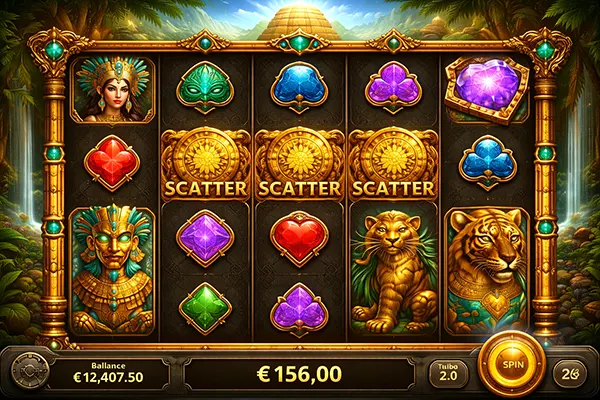
The main bonus round begins with Free Spins, which are triggered by landing three bonus symbols on the required reel positions. The player then chooses one of the two gods before the feature begins. This is important because the game does not leave the feature style to chance. The player actively selects whether the bonus round will focus on triplet reel coverage or on multiplier doubling. That decision gives the round a stronger sense of control than is typical in many contemporary slot releases.
During Free Spins, the wild is fixed at the top of the middle reel, which immediately improves the reel state compared with the base game. If the player has chosen the Eternity God, the first two reels continue to land as triplets and the multiplier stays at a fixed enhanced level. If the Earth God is chosen, the multiplier doubles after each winning free spin and, importantly, it does not reset after a dead free spin within the feature. That rule sharply increases the value of late-stage hits because the multiplier can carry forward rather than collapsing after one miss.
The bonus structure becomes even stronger through the upgrade logic inside Free Spins. Additional bonus symbols award extra spins, which is already a solid extension tool, but the more important twist is that three bonus symbols during Free Spins convert the remaining round into Super Spins. That means the game uses a second-tier feature rather than treating all bonus spins as equal. Instead of merely extending the same state, Aztec Tribute can raise the intensity of the round and move the player into a stronger rule set.
Why Super Spins are the real centrepiece
Super Spins are where the slot’s bonus structure becomes most aggressive. This mode is triggered by four bonus symbols, and it starts with the wild already locked at the top of the middle reel. More importantly, both god effects are active together. That means the player gets the triplet-symbol treatment on the first two reels and the multiplier-doubling logic within the same feature. Structurally, this is the point where the game stops asking the player to choose between spread and escalation and instead combines both.
This combination changes the value profile of every winning spin. Expanded reel coverage increases the chance of connection, while the rolling multiplier system raises the importance of consecutive wins. When these two factors work together, the bonus can become far more dangerous than the standard Free Spins mode. It is still a highly volatile design and not a steady-paying feature, but it is much easier to see why the slot positions Super Spins as its premium outcome.
There is another key point here: in Super Spins, landing three or four bonus symbols awards the maximum win and ends the round. This gives the feature a direct path to the top advertised payout rather than forcing the player to rely only on a long chain of symbol connections. From an analytical point of view, this is a notable part of the bonus structure because it creates two potential routes to a top result: one through a large multiplied hit and another through the bonus-symbol condition itself.
What the bonus structure means for risk, pacing and value
Aztec Tribute is clearly designed for players who accept a volatile reward profile in exchange for a more intricate bonus system. The slot does not behave like a low-intensity title where small wins arrive constantly and bonus rounds simply tidy up the session. Here, the best moments are concentrated in states where the mechanics align: a preserved wild, the correct god mode for the session style, and a successful movement into Super Spins. This creates longer quiet stretches, but it also means the feature design has genuine weight.
The pacing of the slot also deserves attention. Because the bonus structure starts influencing the session before the actual bonus trigger, the game avoids one common weakness of feature-heavy slots: a flat base game. In Aztec Tribute, the climb of the wild and the improvement of the multiplier act as part of the storytelling and the maths at the same time. Even when a full feature does not arrive, the player can still feel that the game is trying to build towards something. That gives the slot a more connected flow than many releases based on disconnected bonus screens.
Value, however, depends on understanding what kind of slot this is. The bonus structure is not built for smooth bankroll management or for players who want predictable feature returns. It is built for contrast: one route offers broader reel influence, the other offers multiplier momentum, and the premium state merges both. For that reason, the game is more suitable for players who judge a slot by the strength of its high-end feature architecture rather than by how often it returns modest wins.
Final assessment of the bonus model
Aztec Tribute succeeds because its bonus structure is layered without becoming messy. The climbing wild creates progression, the god selection introduces a meaningful split in feature logic, Free Spins act as a substantial reward round rather than a token extra, and Super Spins give the game a true second level of bonus intensity. Each part has a clear purpose, and the result is a slot whose premium mechanics feel deliberate rather than assembled from familiar ideas.
Another strength is that the game does not rely on theme alone to sell the bonus package. The Aztec setting is present, but the real substance comes from the rules underneath it. Too many themed slots use cultural imagery as a substitute for mechanical depth. Aztec Tribute does the opposite. The presentation supports the slot, yet the actual reason to play it lies in how the modifiers interact and how the two feature paths create different reward patterns.
As a full review of its bonus structure, the verdict is straightforward: Aztec Tribute is at its best when judged as a high-volatility feature slot with a strong internal design. It will not suit every budget or every playing style, but for players who want a game where the bonus round has real shape, clear progression and a premium upgrade path, this Red Tiger release offers one of the more coherent feature models in its category.